If you're reading this guide, you've probably noticed that your vision isn't what it used to be.
Maybe driving at night has become difficult. Reading requires brighter light. Colors seem less vibrant, or your glasses simply aren't helping anymore. These are some of the most common signs of cataracts.
Cataract surgery is my favorite thing to do. It is one of the safest and most successful procedures in all of medicine, and the results — watching a patient see clearly for the first time in years — never gets old. My goal is to make the process straightforward, comfortable, and deeply personalized to your life and your vision goals.
At Clear Vision Clinic, you'll never feel rushed into a decision. We'll walk through every option together, talk honestly about what each one means for your day-to-day life, and I'll share what I would recommend for someone with your specific eyes and goals. Exceptional outcomes, tailored to you — that is what I am passionate about.
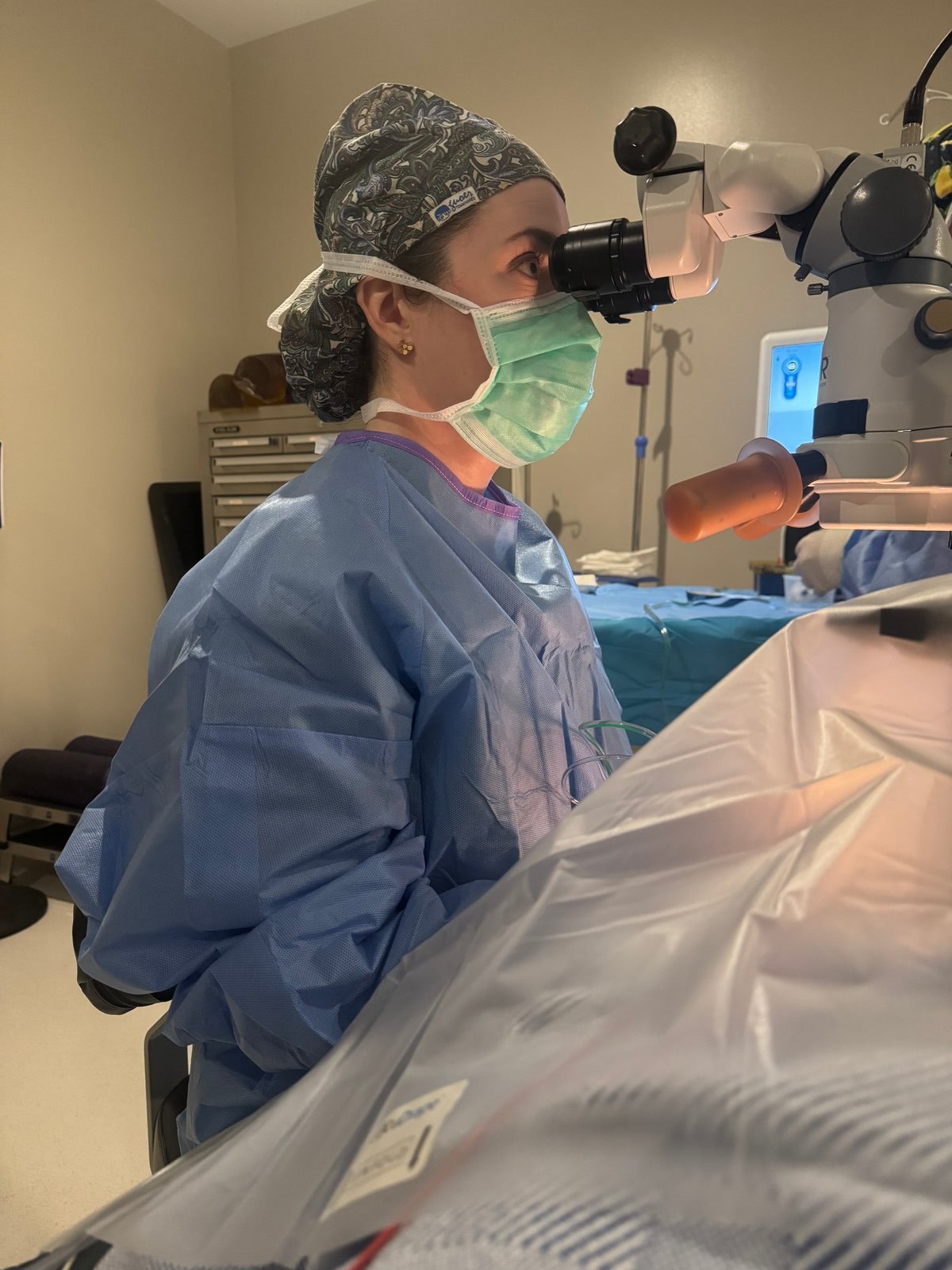
I personally perform every surgery and work hand-in-hand with your trusted local optometrist to optimize your care, your outcomes, and the efficiency of your experience — while making sure you receive the personalized experience you deserve.
I'm honored to be a part of your cataract journey. That trust is something I take seriously, and it is truly a privilege.
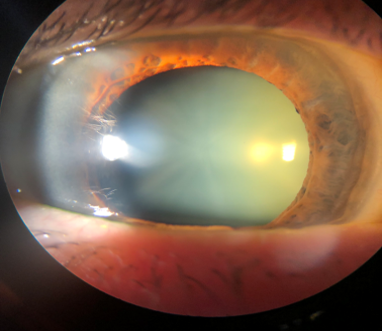
Clinical photograph courtesy of Dr. Sarah Covey, MD.
What sets this practice apart.
Your cataract journey, step by step.
From your first visit through your final prescription, here's exactly what the process looks like.
Consultation
We'll perform a complete eye examination, discuss your lifestyle and vision goals, answer your questions, and determine whether cataract surgery is right for you.
Surgical Planning
We'll obtain precise measurements of your eyes, review your medical history, and help you choose the intraocular lens that best fits your lifestyle.
First Eye Surgery
The procedure itself usually takes about 10–15 minutes, and we use numbing medication and sedation as appropriate to keep you comfortable.
Next-Day Visit
We confirm your first eye is healing beautifully and prepare for surgery on your second eye. This visit could be with Dr. Covey or your referring optometrist, depending on your healing and clinical course.
Second Eye Surgery
Most patients have surgery on the second eye approximately one week later, allowing vision to improve quickly while maintaining excellent safety.
Next-Day Visit
A second check to confirm everything is healing as expected. This visit could be with Dr. Covey or your referring optometrist, depending on your healing and clinical course.
One-Week Visit
A follow-up to ensure a smooth recovery. This visit could be with Dr. Covey or your referring optometrist, depending on your healing and clinical course.
One-Month Visit — Final Prescription
If needed, you'll receive your final glasses prescription and begin enjoying your best possible vision.
One surgery. Several ways to see the world.
Every cataract surgery includes a new lens. The best choice depends on how you live — not simply on your eyes.
There are really three decisions we are making together:
Where do you want to see most clearly without glasses?
Distance? Near? Or the widest possible range?
Do you have astigmatism worth correcting?
Which matters more to you: maximum crispness or maximum glasses freedom?
There is no "best" lens — only the lens that best matches your eyes and your priorities.
Below are simulated examples of what vision can look like with each option, followed by what we'll walk through together at your visit.
About these images: All vision images on this page are simulated representations, not photographs — they're intended to illustrate what different outcomes can look like, not to guarantee a specific result. Every patient's eyes, healing, and visual outcome are different, and Dr. Covey will discuss what's realistic for your particular eyes at your visit.
Monofocal Lens
A monofocal lens is set for one distance. If astigmatism is minimal, that target distance can be quite clear — but the other distances will be blurry without glasses. If significant astigmatism is left uncorrected, all distances can be affected.

Distance Clearer, Near Blurry
With minimal astigmatism, distance vision is relatively clear while near objects — like a phone — remain out of focus without reading glasses.
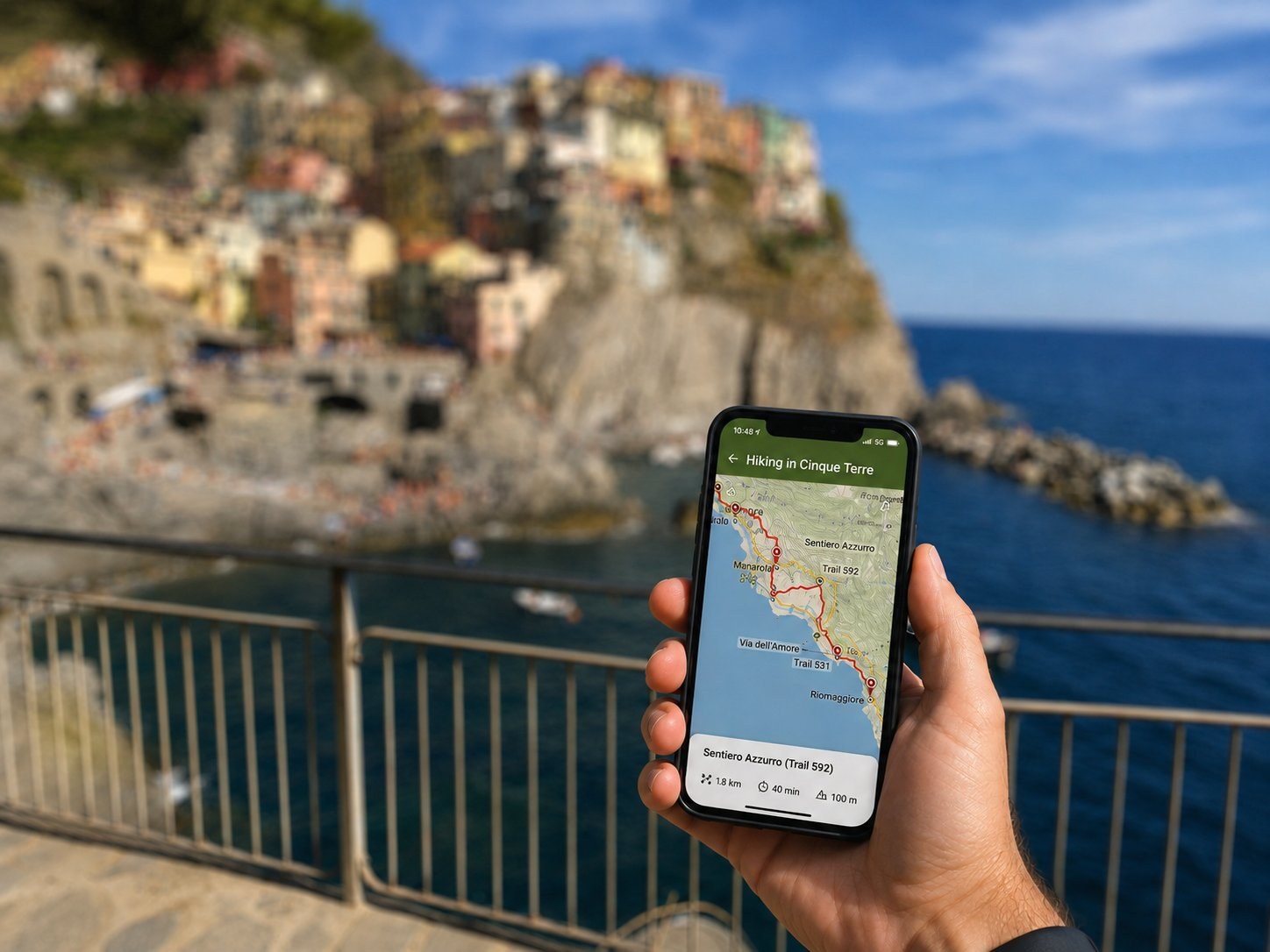
Near Clearer, Distance Blurry
If near vision is chosen as the target instead, the phone is sharp up close, while the distant town and cliffs are soft and unfocused.

Uncorrected Astigmatism — All Distances Affected
When meaningful astigmatism is present and not corrected, vision can be distorted and unclear at every distance, even at the intended target. This is why we measure astigmatism carefully before surgery.
Toric Lens
A toric lens corrects astigmatism at the time of surgery, sharpening your target distance considerably compared to an uncorrected monofocal lens. We measure your corneal astigmatism carefully at your preoperative visit to determine whether you have enough astigmatism for a toric lens to make a meaningful difference.

Distance Clear, Near Still Blurry
With astigmatism corrected, distance vision is sharp and clear. Like a standard monofocal lens, near vision still requires reading glasses.
Multifocal / Extended Depth of Focus
Multifocal lenses aim to provide functional vision across distance, intermediate, and near — reducing dependence on glasses for most activities. The tradeoff is quality for range: compared with a monofocal lens perfectly focused at one distance, vision may not feel quite as crisp, especially in low light, and halos or glare around lights are common early on and can remain noticeable for some patients.

Daytime — Functional at Every Distance
Some softness compared to a perfectly targeted monofocal, but the phone, nearby objects, and distance are all reasonably clear without glasses.
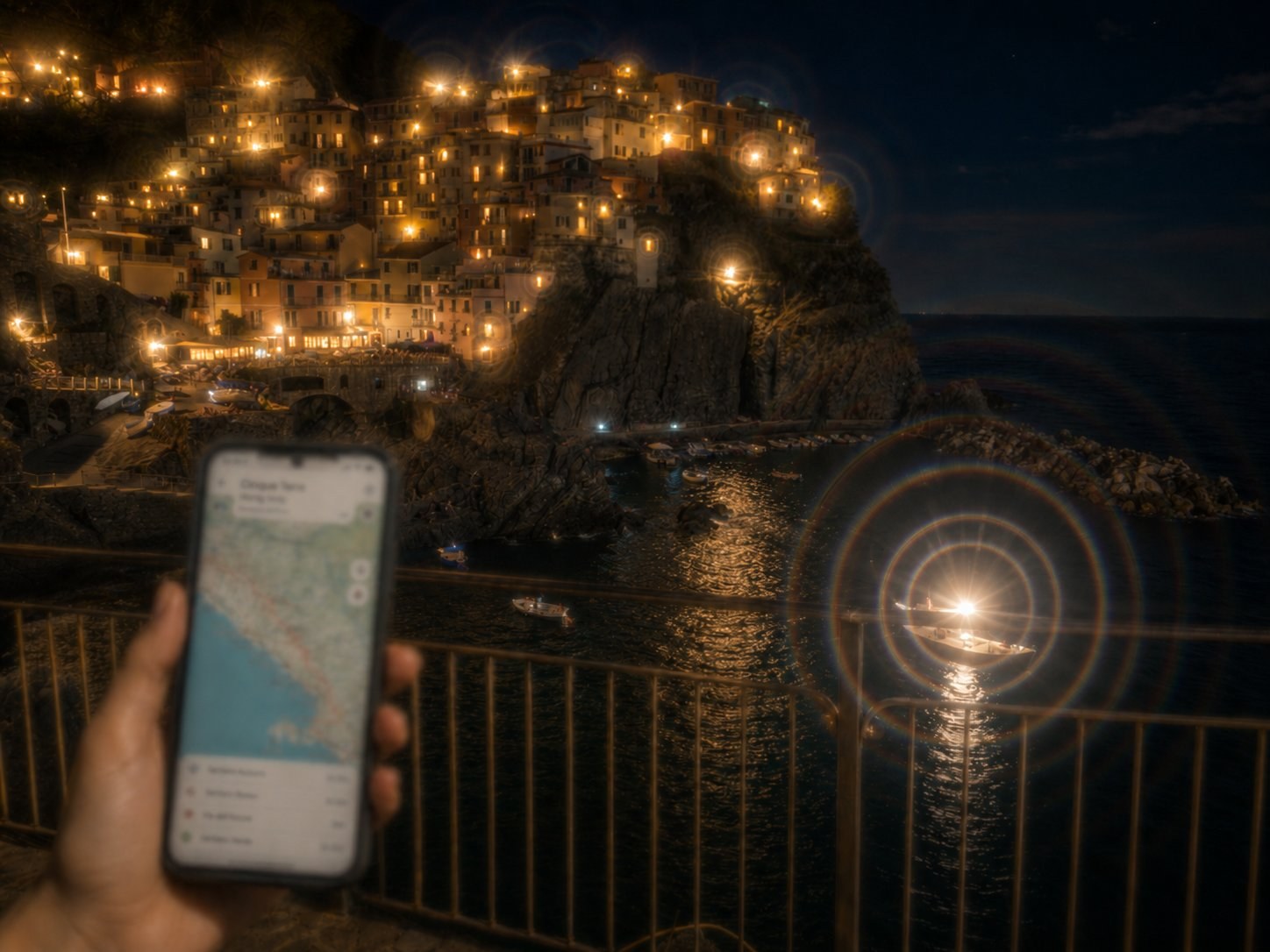
Nighttime — Glare Around Lights
Rings or starbursts can appear around headlights and other bright lights at night. The phone remains readable, and distance stays reasonably clear.
Light Adjustable Lens (LAL)
The LAL is unique — it's fine-tuned after surgery through a series of light treatments. Because it can be adjusted after surgery, we can fine-tune each eye and, when appropriate, use a customized blended-vision strategy to expand your range of vision. One eye may be optimized more for distance while the other contributes more at intermediate or near. Together, many patients achieve excellent functional vision across a broad range with less dependence on glasses. Each eye by itself will not necessarily be equally clear at every distance.
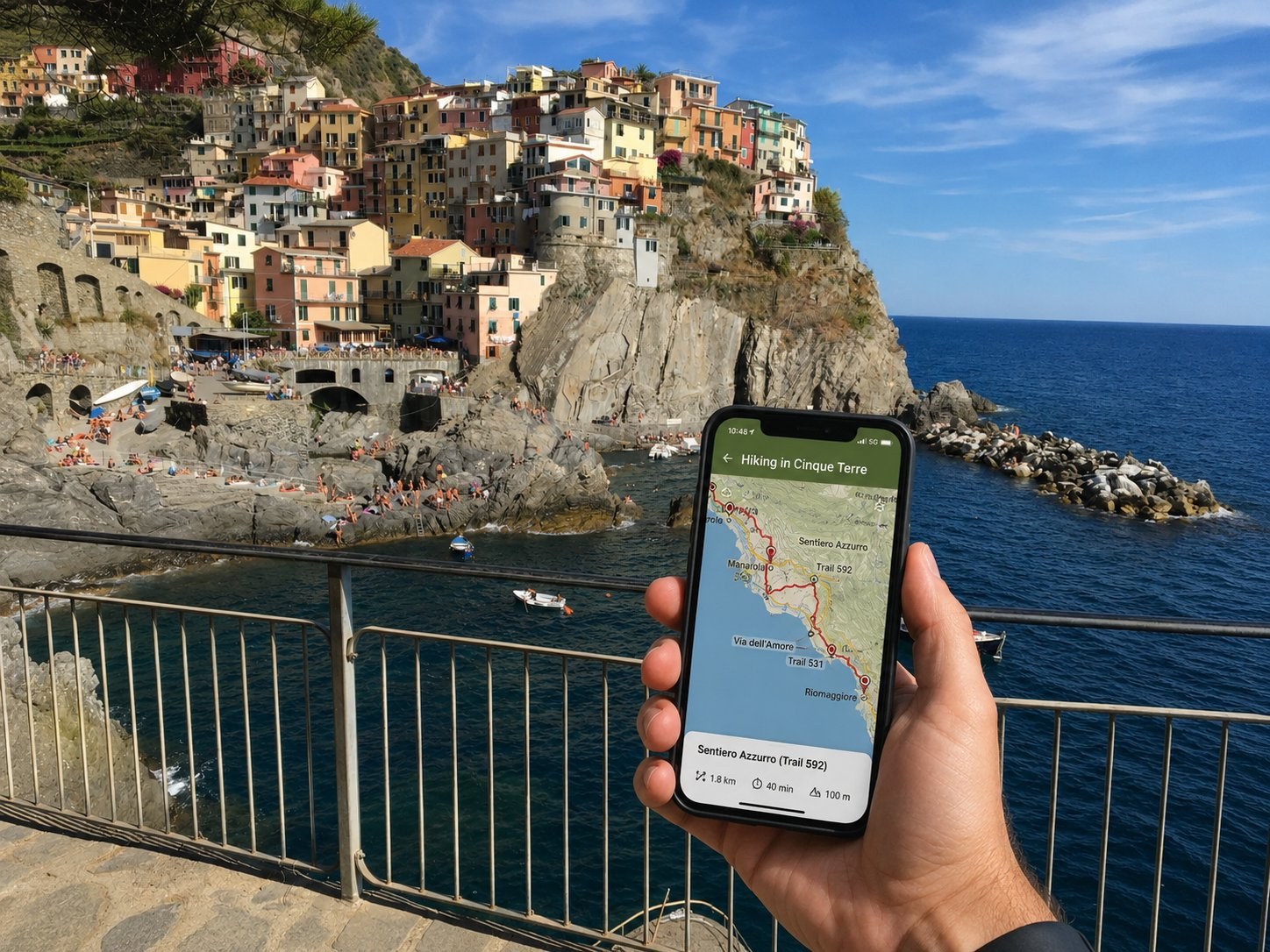
Customized Range of Vision — After You Test-Drive It
This simulates the combined, both-eyes-open experience many LAL patients achieve after their adjustments are complete — a broad functional range with less dependence on glasses.
What "Glasses-Free" Really Means
For patients choosing a presbyopia-correcting or adjustable lens strategy, our goal is to make you comfortable without glasses for most of the things you do every day — driving, watching television, seeing the dashboard, checking your phone, reading menus, and many everyday near tasks.
No lens technology today — regardless of brand or price — can deliver perfectly crisp vision at every distance in every lighting condition. Very fine near-vision tasks like threading a needle, fly tying, or cross-stitching typically still need reading glasses, even with premium lens technology, and dim lighting will occasionally call for them too.
Clarity vs. Glasses Freedom
Glasses freedom and visual clarity are two different things. Our goal with multifocal or LAL lenses is meaningful glasses freedom for most everyday activities — but that doesn't automatically guarantee perfectly crisp clarity in every situation.
Your final clarity also depends on the health of the rest of the eye — particularly the cornea, tear film, macula, and optic nerve. If we identify something that may limit your result, we'll explain it before surgery and, whenever possible, optimize it first.
Why This Appointment Matters So Much
At your preoperative appointment, we take detailed measurements — the curvature and length of your eye, your corneal shape, and more. These measurements are essential to personalizing our recommendation to your specific eyes.
Just as important is the conversation itself. Understanding your job, your hobbies, and your personality helps Dr. Covey recommend the lens that will genuinely fit your lifestyle — not just your eye's anatomy. That conversation is central to how Dr. Covey practices, and we'll review your imaging together so you can make an informed, confident decision.
Dry Eye Can Affect Your Results
Dry eye can significantly affect the accuracy of your preoperative measurements. We often recommend using artificial tears several times a day in the weeks leading up to your appointment to help optimize your ocular surface first — this gives us more accurate, trustworthy measurements to plan your surgery around.
For patients considering toric or multifocal lenses, we frequently repeat these measurements to confirm consistency before finalizing your surgical plan. Our philosophy: measure twice, cut once.
It's also worth knowing that cataract surgery itself tends to make eyes drier for a period of time, since the procedure involves cutting corneal nerves. Most patients return to their baseline within about six months. We have a number of strategies to help you through that adjustment window, and we work hand-in-hand with your optometrist on this both before and after your surgery.
What If My Vision Isn't What We Expected?
Even with careful measurements and excellent surgery, healing is biological and no refractive outcome can be guaranteed. If your vision isn't where we expected it to be, the first step is figuring out why. Sometimes the answer is simply time or treatment of dry eye. Other times there may be residual astigmatism or prescription, a retinal issue, or clouding of the capsule behind the lens. Depending on the cause, options may include glasses, additional treatment, laser vision correction, further adjustment of an LAL, or — in selected cases — lens exchange.
Our commitment is not to promise perfection. It is to stay with you, figure out what is limiting your vision, and make a thoughtful plan.
Questions Dr. Covey hears every day.
If you don't see your question here, reach out — we're happy to answer before your first visit.
Outstanding vision begins with trust.
Whether your goal is reading to your grandchildren, driving at night with confidence, returning to golf, or simply seeing the beauty of Northwest Arkansas more clearly — we're honored to help you get there.
Ready to take the next step?
Reach out to schedule a consultation or ask Dr. Covey a question before your first visit.