
Glaucoma can be confusing because most people don't feel anything wrong.
Your eye may not hurt. Your vision may seem perfectly normal. And your eye pressure alone doesn't tell us whether you have glaucoma or how well controlled it is.
Glaucoma is a disease of the optic nerve. It can slowly damage vision over time, often before you notice a change yourself. Because vision already lost to glaucoma usually cannot be restored, our goal is to identify meaningful change early and protect the vision you have.
At Clear Vision Clinic, I provide comprehensive glaucoma monitoring and treatment, including prescription eye drops and long-acting medication delivery. If you have open-angle glaucoma or ocular hypertension, I offer selective laser trabeculoplasty (SLT); if you have narrow angles, I offer laser peripheral iridotomy. And when appropriate, I can often combine cataract surgery with minimally invasive glaucoma surgery (MIGS) to treat both your cataracts and elevated eye pressure at the same time.
My goal is not simply to make your pressure lower. It is to determine the pressure that is safe for your optic nerve and use the most appropriate treatment to keep your glaucoma stable.
Glaucoma is a disease of the optic nerve.
The optic nerve carries visual information from your eye to your brain. Glaucoma gradually damages this nerve and can lead to permanent loss of vision.
Eye pressure is one of our most important risk factors — but glaucoma is not simply a disease of high eye pressure. Some people have elevated pressure for years without developing glaucoma. Others develop glaucoma even though their pressure falls within what is traditionally considered a "normal" range.
That's why one pressure reading never tells the whole story.
High pressure does not always mean glaucoma.
"Normal" pressure does not always mean your optic nerve is safe.
What matters most is whether your optic nerve is healthy and stable over time.
How Glaucoma Affects the Visual Field
Visual field testing maps how well you see throughout your field of vision. These four real examples show how glaucoma-related vision loss can progress from normal to severe if left unmonitored or untreated.
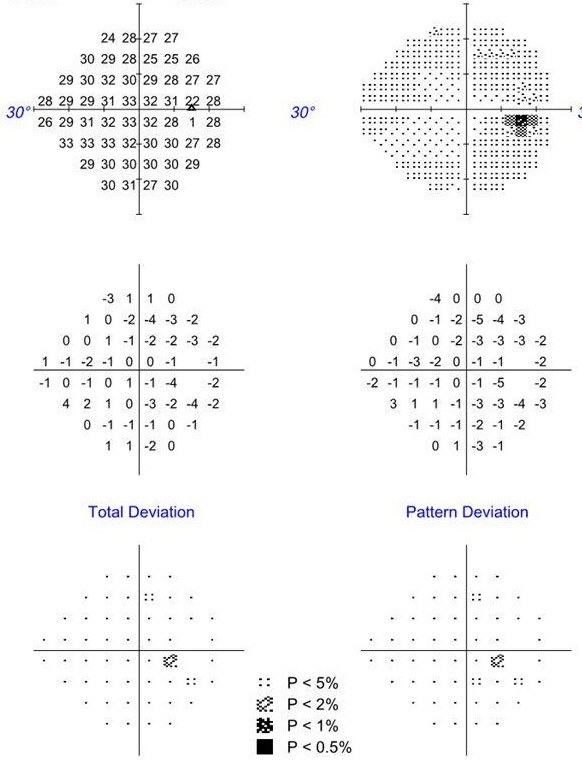
Normal Visual Field
No significant defects — the black squares that indicate vision loss on later scans are absent here.
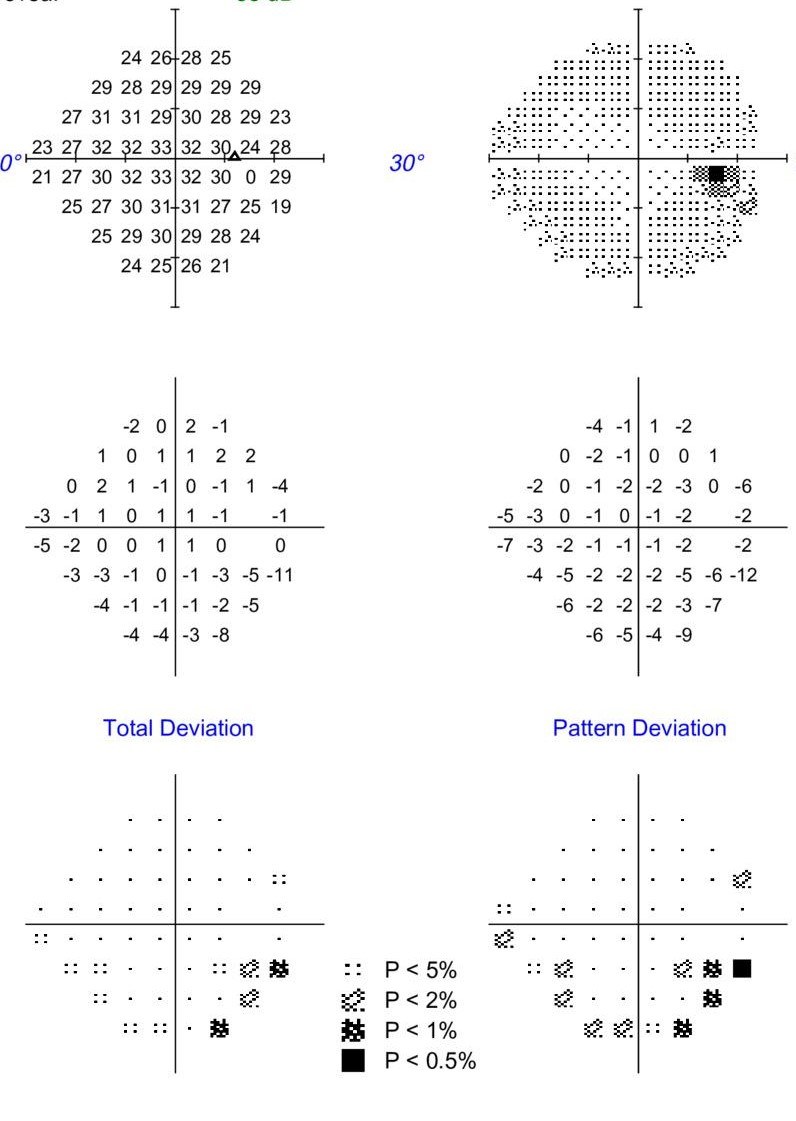
Early Loss — Inferior Arcuate Defect
A small, curved area of vision loss below central vision — a classic early pattern of glaucoma damage that's often not noticed by the patient.
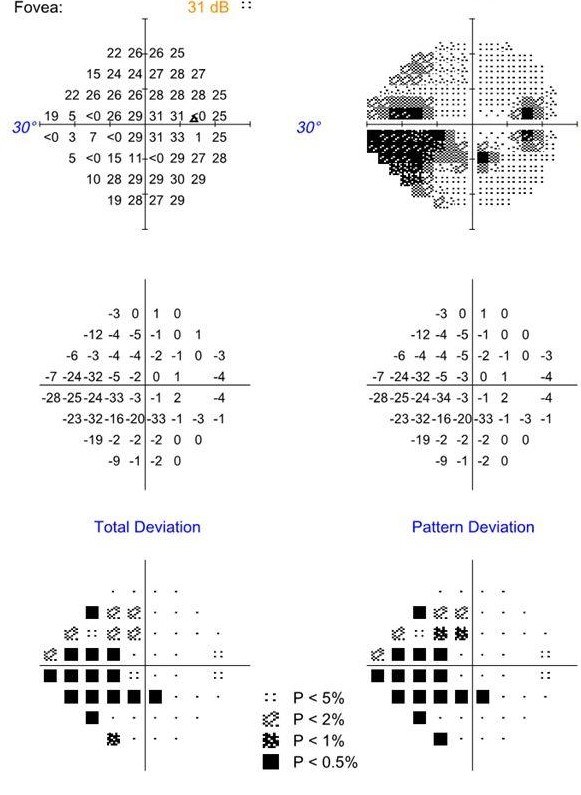
Moderate Loss — Nasal Step
A larger, denser area of vision loss extending across the nasal field — glaucoma progressing without treatment or with inadequate control.
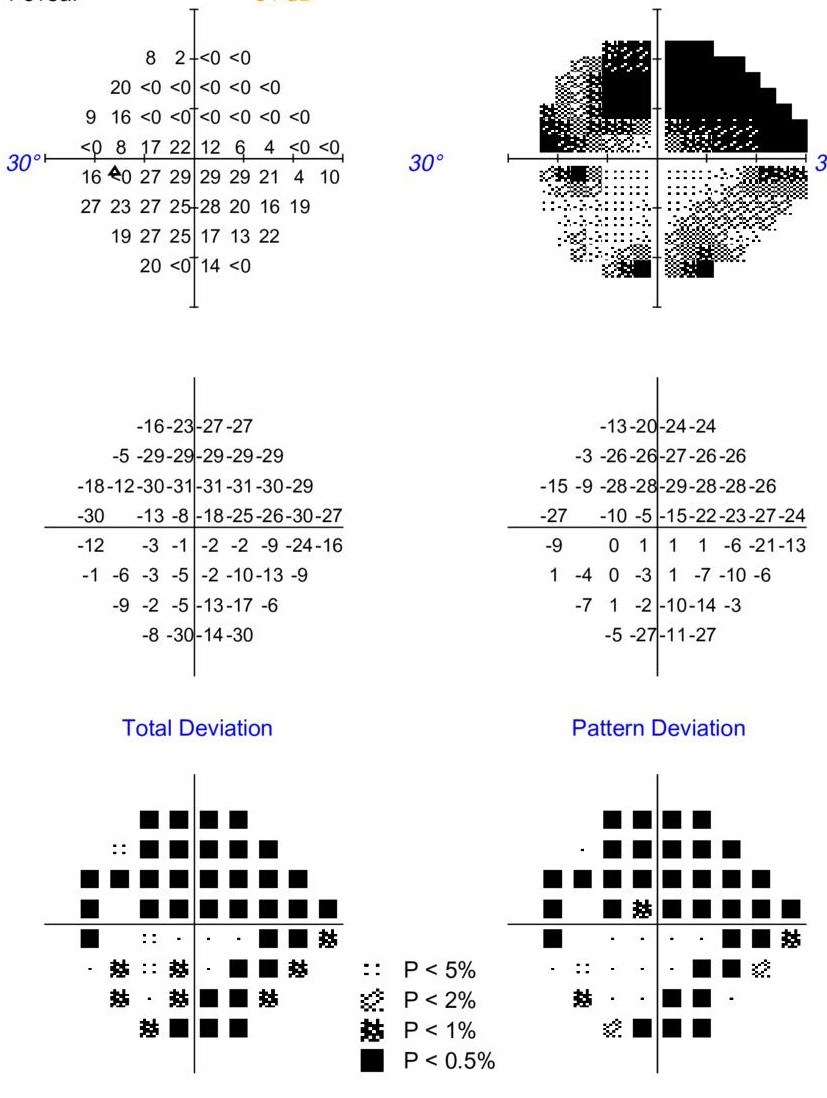
Severe Loss
Extensive vision loss sparing only a small island of central and temporal field — advanced disease that makes early detection and treatment so important.
Keep Good Vision Good
Glaucoma treatment usually doesn't make your vision clearer. Instead, treatment lowers eye pressure to reduce the risk of additional optic nerve damage and future vision loss. That makes glaucoma very different from cataract surgery.
With cataracts, we treat you because we want you to see better.
With glaucoma, we often treat you while you're seeing well so that you can keep seeing well.
We Don't Follow One Number. We Follow the Whole Eye.
The most important question at a glaucoma visit is not simply "What is my pressure today?" It is "Is my glaucoma stable?" To answer that, we follow several pieces of information together.
Eye Pressure
We measure the pressure inside your eye, called intraocular pressure or IOP, and look at how it changes over time.
OCT Imaging
OCT gives us a detailed measurement of the nerve fibers around the optic nerve. Comparing scans over time helps us identify structural change that may be too subtle to notice otherwise.
Visual Field Testing
A visual field test measures how well you see throughout your field of vision and helps us identify functional loss from glaucoma.
Optic Nerve Examination
Dr. Covey examines the optic nerve itself and compares its appearance with your imaging and previous examinations.
Corneal Thickness & Drainage Angle
Corneal thickness helps us interpret eye-pressure measurements more accurately, while examining the eye's drainage angle helps determine the type of glaucoma you have and which treatments may be appropriate.
No single test makes the decision for us. The pattern over time is what matters.
Glaucoma Isn't One-Size-Fits-All
Primary Open-Angle Glaucoma
The most common type of glaucoma, usually developing slowly over many years.
Ocular Hypertension
Eye pressure is elevated, but there may not yet be detectable optic nerve damage. Some patients need treatment; others can be safely monitored.
Glaucoma Suspects
Sometimes the pressure, optic nerve appearance, family history, or testing raises concern without establishing definite glaucoma. Careful follow-up helps us determine whether true disease develops.
Pigmentary Glaucoma & Other Secondary Glaucomas
Other conditions can interfere with the eye's drainage system and cause elevated pressure or optic nerve damage. Treatment is individualized to the cause and severity.
There Are More Ways to Treat Glaucoma Than Ever Before
Not every patient needs the same treatment — and not every patient needs treatment immediately. Depending on your individual eyes, Dr. Covey may recommend:
The right choice depends on your pressure, optic nerve, glaucoma testing, severity of disease, previous treatment, other medical conditions, and how much treatment burden makes sense for your life.
Lowering Pressure Without Adding Another Daily Drop
Selective laser trabeculoplasty (SLT) is an office-based laser treatment for many patients with open-angle glaucoma or ocular hypertension. SLT treats the eye's natural drainage system, helping fluid leave the eye more efficiently and lowering eye pressure. There is no incision and no implant left inside the eye.
SLT can be used:
Laser trabeculoplasty is an established first-line treatment option for open-angle glaucoma and ocular hypertension.
Will SLT get me off my drops?
Maybe — but that isn't guaranteed. Some patients achieve excellent pressure control without medication after SLT. Others still need one or more drops. And because glaucoma is a lifelong disease, the effect of any treatment can change with time.
Our goal isn't necessarily zero drops. Our goal is safe, sustainable pressure control.
Sometimes the Simplest Treatment Is Still the Best
There are several different families of glaucoma medications, and they lower pressure in different ways. Dr. Covey prescribes the full range of topical glaucoma treatments and selects medications based not only on how well they lower pressure, but also on:
Glaucoma drops generally need to be used consistently for as long as they are part of your treatment plan.
A treatment only works if it works in your actual life.
Not Every Medication Has to Come from a Bottle
For selected patients, medication can be delivered from inside the eye rather than relying entirely on daily eye drops. Dr. Covey offers long-acting treatment options including DURYSTA® and iDose® TR when appropriate.
DURYSTA delivers bimatoprost from a biodegradable implant placed inside the eye and is FDA-approved to reduce pressure in open-angle glaucoma and ocular hypertension.
iDose TR is a tiny implant that continuously delivers travoprost inside the eye and is FDA-approved to reduce elevated eye pressure in open-angle glaucoma and ocular hypertension. FDA labeling was updated in January 2026 to support readministration in appropriately selected patients.
These treatments are not right for every eye. Your anatomy, previous surgery, corneal health, treatment history, pressure goal, and other factors all matter.
Daily eye drops are no longer our only medication option.
One Surgery Can Sometimes Address Two Problems
If you have both cataracts and glaucoma, cataract surgery may be an opportunity to improve your glaucoma treatment at the same time. For appropriate patients, Dr. Covey offers minimally invasive glaucoma surgery (MIGS) during cataract surgery — procedures that improve drainage from inside the eye with much less surgical disruption than traditional glaucoma filtration surgery. MIGS is generally used for selected patients with less advanced glaucoma.
Hydrus® Microstent
A tiny device placed within the eye's natural drainage canal during cataract surgery to improve fluid outflow. FDA-approved for use with cataract surgery to reduce eye pressure in adults with mild-to-moderate primary open-angle glaucoma.
iStent inject® W
Uses tiny trabecular bypass stents to help fluid enter the eye's natural drainage pathway more easily. Also FDA-approved for use with cataract surgery in adults with mild-to-moderate primary open-angle glaucoma.
Better Control with Less Medication Burden — When Possible
For an appropriate patient, MIGS performed during cataract surgery may:
But there is an important distinction:
MIGS does not cure glaucoma. You may still need glaucoma medication afterward. You will still need OCTs, visual fields, pressure checks, and long-term monitoring. And some patients will eventually require additional treatment despite an excellent initial result. FDA patient information for Hydrus similarly notes that medication or additional glaucoma surgery may still be required if pressure is not adequately controlled.
Success doesn't mean we stop watching your glaucoma. Success means your glaucoma remains stable.
There Isn't One Perfect Pressure for Everyone
You may hear Dr. Covey talk about your target pressure. This is not a magic number. It is the pressure range we believe gives your optic nerve a reasonable chance of remaining stable based on:
A pressure that is perfectly acceptable for one patient may be too high for another. And sometimes the target changes as we gather more information over time.
We don't treat the pressure in isolation. We treat the patient attached to it.
Sometimes More Powerful Surgery Is the Right Answer
SLT, medications, sustained-release treatments, and MIGS give us many excellent options. But advanced or difficult-to-control glaucoma sometimes requires traditional glaucoma surgery, such as a trabeculectomy or glaucoma drainage implant. These procedures create a new drainage pathway and are different from the minimally invasive procedures typically performed with cataract surgery.
If Dr. Covey believes your eye needs that level of treatment, she will recommend referral to a glaucoma surgical specialist.
The goal is not to do every procedure ourselves. The goal is to make sure you receive the right treatment at the right time.
"Everything Looks Stable" Is Exactly What We Want to Hear
Glaucoma is a chronic disease. Even after successful laser, surgery, or medication treatment, we continue monitoring because the disease can change over time.
So you may come to an appointment, complete your testing, and hear: "Everything looks stable. Let's keep watching."
That isn't a visit where nothing happened. That is the outcome we're working toward.
Questions Dr. Covey Hears All the Time
Watch carefully. Treat thoughtfully. Protect vision for the long term.
Good glaucoma care isn't about reacting to one pressure measurement. It's about establishing a reliable baseline, watching for meaningful change, and treating when the benefit of treatment outweighs the burden.
Sometimes that means watching. Sometimes it means a drop. Sometimes it means SLT. Sometimes it means long-acting medication. And sometimes cataract surgery gives us an opportunity to improve glaucoma control at the same time.
The goal is simple: keep your optic nerve stable and protect useful vision for the years ahead.
Ready to schedule?
If you've been diagnosed with glaucoma or ocular hypertension, are considered a glaucoma suspect, or have been referred for glaucoma evaluation, reach out.